Ndigboamaka Progressive; 58 Lagos Markets Send Strong Warning to Politicians Ahead of 2027, Demand Creation of Traders Bank
Beadysword Insight
“Stop bringing us slogans. Bring us economic solutions.” say the Ndigboamaka ProgressivMarket Association, an umbrella body of over 58 major markets in Lagos dering a roundtable with Maritime Journalists Association of Nigeria (MAJAN) in Lagos on Tuesday,
While politicians are busy plotting alliances and defections, traders who keep Nigeria’s economy alive are asking a simple question: How do you expect us to survive when we provide our own roads, security, electricity, and still pay multiple taxes?
Remember COVID-19? When offices and parastatals were shut down, traders kept goods moving, markets supplied, businesses alive, and customs revenue flowing.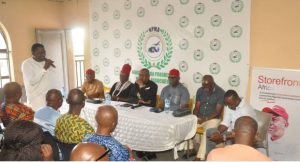
Now, they are demanding:
✅ A Traders Bank with single-digit interest loans.
✅ A seat at the policy-making table.
✅ An end to policies made without consulting those who drive the economy.
✅ Unity over ethnic and religious politics.
This is not just a trader’s issue. It is an economic survival issue for Nigeria.
Every government official, political aspirant, market leader, importer, exporter, and SME owner should read this.
The question is simple: Will 2027 politicians listen to the people who create wealth, or continue talking only to themselves?
Read the full Beadysword Insight report during the MAJAN Media Parley: IndigboAmaka roundtable in Lagos. and join the conversation.
Nigeria’s political class is already deep into the noise of 2027 — alliances, defections, zoning permutations. But in the markets that quietly keep Lagos State’s economy moving, a different and far more urgent conversation is taking place, one that has very little to do with who sits in which seat and everything to do with whether ordinary traders can survive long enough to vote at all.
That conversation came into public view this week when the NDIGBOAMAKA Progressive Market Association, which represents more than 58 major markets across Lagos, used a meeting with the Maritime Journalists Association of Nigeria to put political aspirants on notice. Through its president, Comrade Chinedu Ukatu, the association made a pointed demand: bring economic plans, not slogans.
The Disconnect at the Heart of the Frustration
President of the association, Comrade Chinedu Ukatu,central complaint was not about creation of Traders Bank . and alos about the absence of a relationship. He described a governance culture in which decisions affecting trade and commerce are designed and announced without ever consulting the people who have to live with the consequences — the traders themselves. Currency instability, the unpredictable cost of doing business, and policy reversals that arrive with no warning have, in his account, made it nearly impossible for importers and small business owners to plan beyond the next few months.
That instability, he argued, is precisely why so much of the current political conversation feels disconnected from the real economy. Rather than engaging with how to fix infrastructure or grow the business environment, the public discourse ahead of 2027 has been consumed by positioning and power plays. As Ukatu put it, trade is what drives the economy — and yet the people steering the political conversation rarely talk about it in those terms.
The Numbers Traders Live With Every Day
Strip away the politics, and the picture Ukatu painted is strikingly concrete. Small and medium-scale enterprises across Nigeria , Lagos’s as as point markets are contending with lending rates too high to make borrowing viable, layered taxation that piles new levies on top of old ones, and a near-total absence of state-provided infrastructure. According to Ukatu, traders are often left to build their own access roads, provide their own light, generator everywhere in the market, fund their own security, and maintain market facilities entirely out of pocket, only to then face tax demands as though the government had provided those services itself. On top of formal taxation, non-state actors continue to impose informal levies that quietly erode whatever margin remains.
The result is a trading population that is resourceful out of necessity, not by choice, and one that the association believes has untapped potential for manufacturing and export growth, if only financing and policy support matched the ambition.
A Concrete Proposal: The Traders Bank
Where this story breaks from the usual cycle of complaint without solution is in what the association is actually proposing. Ukatu floated the creation of a dedicated financial institution — a “Traders Bank” — co-owned by government and the trading community, built specifically to extend single-digit interest loans to SMEs.
The logic is straightforward: if access to affordable credit is the single biggest constraint on small business growth, then a purpose-built lender, with traders themselves holding a stake, could unlock the kind of expansion that generic commercial banking has consistently failed to deliver.
It is the kind of proposal that policymakers eyeing 2027 might want to take seriously — not as a campaign promise, but as a working blueprint they could adopt and claim credit for delivering.
A Seat at the Table, Not Just a Vote at the Ballot
Beyond financing, the association’s other core demand is structural: traders want to be consulted before policy is made, not informed after the fact. Ukatu was explicit that the people most affected by economic decisions should have a voice in shaping them, rather than simply absorbing whatever emerges from closed-door policymaking. It is a modest-sounding request with significant implications — it would mean the government treating market associations as economic stakeholders rather than informal sector statistics.
Trade as the Antidote to Division
Perhaps the most significant aspect of the association’s message was not strictly economic, but social. Ukatu revealed that the association has established a sensitisation committee dedicated to fostering peace, unity, and cooperation among traders from different ethnic and religious backgrounds across Lagos. The move is aimed at countering the growing tendency of some politicians to exploit ethnic and religious sentiments for electoral advantage.
According to him, the marketplace remains one of the few places where unity is practised daily. Traders do not ask customers about their tribe, religion, or political affiliation before making a sale. no matter how close you feel you are to the politician, they do not build a different market for you, we all shop together, Business thrives because cooperation outweighs division, and markets function successfully because people from diverse backgrounds work together for mutual benefit.
The importance of traders to the Nigerian economy became even more evident during the COVID-19 lockdown in 2020. While many government offices, institutions, and parastatals were shut down or operating at minimal capacity, commerce did not completely stop. Through organisations such as WAHAF, goods continued to move across borders and within the country, markets remained supplied, businesses stayed afloat, and government revenue from customs duties continued to flow. Traders played a critical role in keeping economic activities alive during one of the most difficult periods in modern history.
As political activities intensify ahead of future elections, the association’s emphasis on unity through trade serves as a reminder that economic prosperity is best achieved when Nigerians see one another as partners in business rather than rivals divided by ethnicity or religion. The marketplace has long demonstrated that cooperation creates wealth, while division benefits only those who seek to exploit it.
Why Government Should Be Paying Attention Now
Market associations of this size are not marginal interest groups — they represent the daily economic activity of a huge share of Lagos’s working population, and by extension, a meaningful slice of the state’s tax base, employment figures, and consumer spending. A bloc representing 58 markets making a coordinated, specific, public demand — backed by a concrete financing proposal — is not background noise. It is an early signal of what could become an organised voting and advocacy bloc heading into 2027, one already on record about exactly what it expects from anyone seeking its support.
For political aspirants still drafting their economic platforms, the brief is now sitting in plain sight: address the cost of credit, fix the consultation gap, and stop treating market women and men as a constituency to be courted only during campaign season.
The Maritime Journalists Association of Nigeria, through its president Jerry Aguigbo, used the same gathering to commend the traders’ contribution to national economic life and to call for closer collaboration between the media and the trading community — a recognition that stories like this one need amplification well beyond the markets themselves.
Beadysword will be watching to see which 2027 contenders actually respond to this challenge with substance, and which ones simply let it pass.