
Girlfrind Walking Away Becomes a Death Sentence: The Anambra Tragedy and Nigeria’s Culture of Men Entitlement
.A young woman, Umuora Mmesoma, was reportedly killed by her former boyfriend in Uga, Aguata Local Government Area of Anambra State. Reports say she ended the relationship before she went missing on Friday, October 16, 2026. A man known as Chima from Ebonyi State confessed that he killed Mmesoma in his house in Uga. dismembered her, put her body in a bag, and dumped it at an undisclosed location.
The Silent Crisis: Surviving and Challenging the Reality of Women in Nigeria
It is an agonising paradox of modern Nigerian relationships: a man can treat a woman with profound disrespect, cruelty, womanising and psychological or physical abuse, yet fiercely expect—and demand—that she remains by his side. When she attempts to escape, she is met not only with his resistance, but often with a chorus of condemnation from Nigerian society. In some cases, some old women told her she is not patient, reminding them how long she endured such treatment during her time, legalising such maltreatment behaviour from men
The tragic reality is that women in Nigeria are navigating a landscape filled with hidden and overt threats to their safety, well-being, and very lives.
It is a chilling and devastating headline that has become heartbreakingly familiar: a young woman in Anambra State was brutally killed by her boyfriend simply because she chose to walk away from the relationship. Her crime was daring to exercise her autonomy, deciding that her peace and safety mattered more than staying with a man who no longer deserved her presence.
Yet, the tragedy does not end with the fatal blow. It extends into the broader Nigerian societal framework—a culture that weaponises expectations, normalises toxic male entitlement, and quietly lays the groundwork for such violence to thrive.
https://www.facebook.com/share/v/1QEqj7cX5W/
The Grim Statistics: Women as an Endangered Species
The numbers paint a stark, undeniable picture of the threats facing Nigerian women:
-
The 1-in-3 Reality: According to data from the United Nations Population Fund (UNFPA) and UN Women, approximately 31% to 33% (roughly 1 in 3) of Nigerian women aged 15 to 59 have experienced physical or sexual violence.
-
Intimate Partner Vulnerability: Studies and reports indicate that up to 36% of married women are survivors of intimate partner violence, trapped in domestic environments where their homes become zones of danger rather than sanctuary.(Yet society keeps telling such women to stay in such enviroment, to endure, but fails to tell the men that their behaviours are bad, which is why many men keep repeating such behaviours always)
-
The Silence of Scale: For every single woman who finds the courage to speak out or report abuse, thousands silently endure out of fear, social stigma, or economic entrapment Fights her,
The Anatomy of a Preventable Tragedy
When intimate partner violence escalates to femicide, it is rarely a sudden, isolated snap. It is often the culmination of a deeply entrenched belief system that views women not as independent human beings with agency, but as property or extensions of a man’s ego.
In cases like the one in Anambra, the warning signs are frequently enabled by a society that tells men:
-
Rejection is an insult to your manhood: Cultural conditioning often teaches men that they must “control” their partners, making a woman’s departure feel like an intolerable wound to their pride.
-
Ownership over partnership: Relationships are sometimes framed as contractual possessions rather than mutual bonds built on respect and free will.
When a man internalises these toxic ideals, the choice to end a relationship is perceived as a threat that must be neutralised, leading to unthinkable violence.
How Society Encourages and Excuses the Violence
While the hand that strikes or ends a life bears direct guilt, the surrounding societal machinery acts as an accomplice. Nigerian society often fosters an environment that indirectly encourages this violence through subtle and overt complicity:
-
Victim-Blaming Culture: When a woman faces abuse or tragedy, the immediate questions from society are often accusatory: “Why did she provoke him?” or “Why couldn’t she just endure?” This shifts the accountability away from the abuser and places it onto the victim. Encouraging more men to do more.
-
The “Endurance” Doctrine: As highlighted by generational elders who preach that a woman must suffer through any hardship to keep a home intact, society teaches women that leaving is shameful. Tragically, when a woman does try to escape a dangerous union, the lack of institutional safety nets and community support leaves her vulnerable.
-
Minimising Emotional Abuse: Controlling behaviours, stalking, and threats are frequently dismissed as “passion” or “normal relationship struggles” until they escalate into physical destruction.
Breaking the Cycle
We cannot continue to mourn these preventable losses while maintaining the cultural status quo that feeds them. Protecting women requires a radical cultural reset:
-
Redefining Strength: We must unlearn the toxic narrative that equates a woman’s endurance of abuse with virtue. True strength is walking away from harm.
-
Holding Perpetrators Accountable: Justice must be swift, visible, and uncompromising for anyone who harms or takes the life of a partner.
-
Teaching Consent and Respect: Boys and young men must be raised to understand that rejection is a normal part of life, that paying a woman’s brideprice does not mean you own her, and that a woman’s body and choices belong entirely to her.
May her soul find rest, and may her tragic story catalyse the urgent, uncompromising protection and liberation of women everywhere.
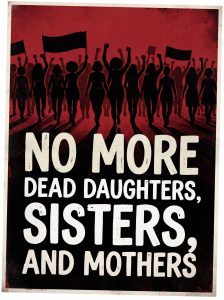
Join “No More Dead Daughters, Sisters, & Mothers ” ON 28 Nov 2026 by sending email


