₦4.03 TRILLION FOR CUSTOMS, DEEPENING HARDSHIP FOR NIGERIANS: WHO IS PAYING THE PRICE?
As Nigeria Customs pursues an ₦11.07 trillion revenue target, the public deserves answers on the cost of import duties, cargo clearance and the rising prices of essential goods
By Beadysworld TV | Investigative Commentary
Nigeria is in the grip of a painful cost-of-living crisis. Food prices remain a major burden on households, businesses are struggling with operating costs, and many citizens are finding it increasingly difficult to afford necessities. For some families, even putting two decent meals on the table every day has become a challenge.
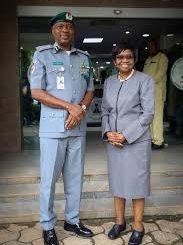
Yet, amid this hardship, the Nigeria Customs Service (NCS) has announced that it collected approximately ₦4.03 trillion in revenue in the first half of 2026, while pursuing a staggering ₦11.07 trillion target for the full year.
The disclosure by Comptroller-General of Customs, Adewale Adeniyi, raises an urgent question that Nigerians can no longer afford to ignore:
When government revenue keeps rising, why does survival keep getting harder for ordinary citizens?
TRILLIONS IN REVENUE, BUT WHERE IS THE RELIEF?
According to the figures provided, Customs revenue has risen sharply over the past three years.
- 2023: Approximately ₦3.2 trillion.
- 2024: ₦6.105 trillion.
- 2025: ₦7.28 trillion.
- First half of 2026: Approximately ₦4.03 trillion.
In 2025, the Service reportedly exceeded its ₦6.58 trillion target, recording an increase of about 19 per cent over the previous year. Contributions from companies under the Authorised Economic Operator programme also reportedly increased by approximately 30 per cent.
These figures may indicate stronger revenue collection, improved compliance and better enforcement. But revenue growth alone does not tell the whole story of economic progress.
The real question is whether these collections are being achieved in a way that supports trade, protects consumers and strengthens the productive economy—or whether the cost of meeting government revenue expectations is adding to the financial pressure already facing Nigerians.
A government agency can celebrate record collections while citizens continue to struggle. Both realities can exist at the same time.
THE HIDDEN COST OF IMPORTATION: WHO REALLY PAYS?
Customs duties are not paid in isolation from the wider economy. Importers must account for applicable duties, levies, port charges, shipping-related costs, terminal charges, clearing expenses and other legitimate fees associated with bringing goods into Nigeria.
When these costs rise, importers do not always absorb the burden. Many importers try to recover their expenses by increasing selling prices.
The consequences can reach the market stall, supermarket shelf, pharmacy, electronics shop, building-materials market and small business operating on limited capital.
The ordinary Nigerian who never imports a container will ultimately pay part of its cost.
A trader clearing goods at a port must calculate the cost of bringing those goods into the country. A manufacturer importing essential inputs must factor import expenses into production. A small business owner must then decide whether to increase prices, accept lower profits or close down business.
Ultimately, consumers pay more at the end.
This is the economic chain that deserves serious public scrutiny: when the cost of bringing goods into Nigeria increases, how much of that burden is transferred to consumers, and how much is justified by actual government charges and legitimate commercial expenses?
Customs revenue does not automatically prove that Nigerians are being exploited. However, neither should record revenue be celebrated without examining its impact on the cost of living and the competitiveness of Nigerian businesses.
IS THE REVENUE TARGET BECOMING MORE IMPORTANT THAN THE PEOPLE?
Comptroller-General Adewale Adeniyi has said the Service intends to pursue its 2026 target through improved compliance, data-driven operations and smoother trade facilitation, rather than harassment or practices that discourage trade.
That commitment is important. Nigerians should expect Customs to honour it.
But the ₦11.07 trillion target raises a legitimate accountability question: How will the Service meet its revenue expectations without placing unnecessary pressure on legitimate importers and, ultimately, causing consumers to suffer more?
Revenue targets are government policy decisions. They should not become an excuse for arbitrary assessments, unjustified charges, intimidation, unnecessary delays or enforcement practices that punish compliant businesses.
It would be wrong to assume, without evidence, that every Customs officer is under pressure to extort traders or that every increase in revenue comes from excessive charges. Equally, it would be irresponsible for authorities to ignore credible complaints about the cost, transparency and administration of importation.
The public deserves transparent answers about how revenue targets are translated into operational expectations at commands and ports, how officers are assessed, and what safeguards exist against unlawful or excessive collections.
If revenue performance is the priority, consumer welfare and legitimate trade must remain part of the measurement of success.
CAN WE BLAME CUSTOMS ALONE? NO. SHOULD CUSTOMS BE HELD ACCOUNTABLE? YES.
The responsibility does not rest with Customs alone.
The Presidency and the Federal Government determine the broader fiscal and economic policy direction. Customs operates within the laws, regulations and revenue expectations established by the government.
Exchange-rate changes can also increase the naira value of duties assessed on imported goods, even without a corresponding increase in the quantity imported. Adeniyi himself acknowledged the role of exchange-rate adjustments in the rising value of collections.
Other factors—including shipping expenses, port charges, foreign exchange costs, taxes, supply disruptions and international conflicts— also affect import prices.
This means the hardship facing Nigerians cannot honestly be attributed to Customs revenue alone, but it largely affects it. .
However, this does not remove the need for accountability. Customs has a responsibility to ensure that assessments are lawful, charges are transparent and moderate, procedures are efficient and legitimate, and that traders are not subjected to avoidable burdens.
The Federal Government, in turn, must examine whether its revenue ambitions are consistent with its promises to reduce inflation, encourage investment, support small businesses and improve living standards.
The government cannot demand more revenue from an economy under pressure without explaining how its policies will protect the people who ultimately bear the cost.
NIGERIA CANNOT TAX ITS WAY TO PROSPERITY
Nigeria needs revenue to fund public services, infrastructure, security and development. Customs revenue can contribute to these objectives but must have a human face, and effective enforcement against smuggling, under-declaration and other forms of non-compliance is necessary.
But revenue collection is not the same as economic development.
A country can collect more money at its borders and still weaken its economy if the cost of importing machinery, raw materials, medicines, essential goods and business inputs becomes excessive, and puts many burdens on its citizens.
Small importers may struggle to survive. Manufacturers may face higher production costs. Traders may reduce their stock. Consumers may cut spending because their incomes cannot keep pace with prices.
Where imported goods or inputs are essential and affordable local alternatives are unavailable, higher import costs can place additional pressure on households and businesses.
Nigeria must therefore pursue a balanced approach: collect legally due revenue, eliminate leakages, simplify legitimate trade, promote local production and prevent unnecessary charges from being passed down the supply chain.
The goal should not merely be to collect more money. It should be to build an economy in which businesses can operate, jobs can grow, and citizens can afford the necessities of life.
THE QUESTIONS CUSTOMS AND THE FEDERAL GOVERNMENT MUST ANSWER
In the interest of public accountability, Beadysword blog news calls for clear answers to the following questions:
- What exactly accounts for the ₦4.03 trillion collected?
How much came from import duties, excise duties, levies, other statutory collections and the effect of exchange-rate changes? - How will the ₦11.07 trillion target be achieved?
What safeguards will ensure that legitimate importers are not subjected to arbitrary assessments or unnecessary financial pressure that, in the end, will burden the life of an average Nigerian? - Are all applicable charges transparent and predictable?
Can importers readily understand what they are expected to pay, how assessments are calculated and how disputed charges can be challenged? - What happens to complaints about excessive or unlawful charges?
How many complaints are received, investigated and resolved, and what accountability mechanisms protect traders? - What measurable benefits are Nigerians receiving from increased collections?
How do the government’s revenue and trade policies support lower living costs, local manufacturing, employment and affordable essential goods? - Is the government measuring the wider economic cost of its revenue policies?
Revenue figures should be assessed alongside their effects on consumer prices, business survival, trade volumes and investment.
These are not anti-Customs questions. They are questions of responsible government.
THE BOTTOM LINE: RECORD REVENUE MUST MEAN MORE THAN RECORD FIGURES
The Nigeria Customs Service may have legitimate reasons to celebrate improved collections. But Nigerians also have legitimate reasons to demand that revenue performance be judged alongside the economic realities facing their households and businesses.
The ₦4.03 trillion reported for the first half of 2026 is a significant public-finance figure. The ₦11.07 trillion annual target is an ambitious one. Neither figure, by itself, proves wrongdoing or establishes that Customs charges are the principal cause of Nigeria’s hardship.
at actionsthat actioWhat it does establish is the need for greater transparency about how revenue is generated, how trade costs are managed and how government policies affect the public. We can’t be more focused on generating revenue while our citizens suffer for the action
The Federal Government must ensure that revenue targets do not undermine the businesses expected to generate economic activity. Customs must make legitimate trade easier, not harder. And all relevant agencies must be accountable for unlawful charges, avoidable delays and practices that unnecessarily increase costs that will, in the end, affect lives.
Nigerians are not asking the government to abandon revenue collection. They are asking the government to collect fairly, spend responsibly and govern in a way that recognises the limits of ordinary people’s pockets.
Because when the government celebrates trillions while citizens struggle to afford food, the question is no longer just how much money has been collected. The question is whether the economy is working for the people or against the people.
Beadysword blog news will continue to examine the policies, charges and economic decisions affecting Nigerian businesses and households. Public agencies and affected stakeholders are encouraged to provide evidence, clarification and responses to the issues raised.
What is your experience with Customs duties, clearing charges and the cost of imported goods? Share your views respectfully.