High Clearing Costs, Congestion Threaten Nigeria’s Maritime Hub Ambition, Stakeholders Warn
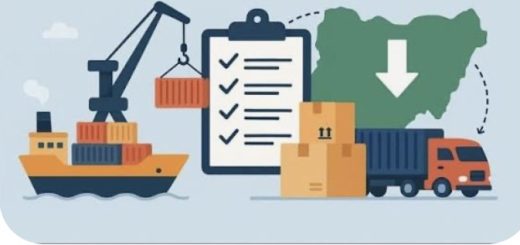
Stakeholders in Nigeria’s maritime sector say the country’s goal of becoming West and Central Africa’s leading maritime and trade gateway will not be met unless its ports are modernised end to end, covering infrastructure, digitalisation, regulation, security and hinterland connections.
They spoke at the 2026 Annual Maritime Lecture of the Maritime Reporters Association of Nigeria (MARAN), known as MAMAL, amid growing concern over port costs, congestion, cargo evacuation and the competitiveness of Nigerian ports.
Modernisation must show in results, not spending — Usman
In her keynote address, Hadiza Bala Usman, former Managing Director of the Nigerian Ports Authority (NPA) and now Special Adviser to President Bola Ahmed Tinubu on Policy Coordination, said port modernisation should be judged by improvements in cargo movement, turnaround times, logistics costs and export capacity, not by how much money is spent on infrastructure.
She listed six areas that need attention: infrastructure and operational models, modern equipment, digitalisation, institutional reform, human capital development, and commercial modernisation covering tariffs, concessions, investment and service quality.
Usman noted that Nigeria’s seaports handle more than four-fifths of the country’s physical imports and exports, so their efficiency affects the wider economy.
“When port costs are high, they travel into the price of rice on the trader’s stall, the landed cost of raw materials for the manufacturer and into the exchange-rate pressure created when importers pay dollar-denominated charges on top of naira-denominated uncertainties,” she said.
She praised recent gains: the World Bank and S&P Global Market Intelligence’s Container Port Performance Index ranked Tin Can Island Port 10th globally and Lagos Port Complex, Apapa, 12th among the world’s most improved container ports between 2020 and 2025. She also cited higher cargo throughput, digitalisation efforts and ongoing rehabilitation of major port infrastructure as signs that reforms are working.
She warned, however, that these gains must be locked in through sustained investment and measurable performance. Rebuilding Apapa and Tin Can Island ports, rehabilitating the eastern ports, expanding Lekki Deep Sea Port and developing other facilities would only deliver full value if backed by efficient road, rail, barge, inland logistics and dry-port connections.
“A port cannot be globally competitive if its hinterland is not competitive,” she said.
Tariff structure under scrutiny
Usman called for a full review of Nigeria’s port tariff structure, arguing that attention should move from individual charges to the total cost of moving cargo through the Nigerian supply chain.
She said reports that clearing a standard 20-foot container through Apapa costs about N14 million to N15 million, against lower costs at some competing West African ports, should worry policymakers. That total, she added, is made up of several charges, including statutory port tariffs, terminal handling, shipping-line charges, detention, demurrage, haulage, documentation and clearing.
Cutting duplicated and obsolete charges and unnecessary regulatory interventions, she said, would significantly lower the cost of doing business at Nigerian ports.
“Charges cannot remain frozen indefinitely while infrastructure deteriorates, but neither can users be required to pay any amount demanded. Tariffs must be linked to value and performance,” she said.
She called for a predictable, transparent, performance-based tariff regime, with adjustments backed by published methodologies, international benchmarks and measurable service improvements. She also proposed an annual Port Economic Performance Report covering vessel and truck turnaround times, cargo-handling productivity, equipment availability, customs clearance, total logistics costs, digital transactions, export connectivity, customer satisfaction and dispute-resolution timelines.
Government promises structural renewal, not cosmetic repairs
Minister of Marine and Blue Economy Adegboyega Oyetola, represented by NPA General Manager of Corporate and Strategic Communications Seyi Iyawe, said the Federal Government was pursuing an ambitious programme to transform maritime infrastructure and position Nigeria as a hub for West and Central Africa.
Oyetola said approval had been secured for comprehensive modernisation of Apapa, Tin Can Island and other ports, describing it as structural renewal rather than cosmetic rehabilitation. The programme covers rebuilding key infrastructure, deeper channels for larger vessels, replacing obsolete equipment and overhauling port operations.
“Our objective is to create ports that can move cargo, accommodate larger vessels, reduce turnaround time and lower the cost per unit of cargo handled,” he said.
He said Nigeria could no longer rely only on its traditional ports, and that deep-sea ports would help spread cargo flows, ease pressure on existing facilities, open new economic corridors and create opportunities for investment, employment and industrial development.
He also cited investment in modern marine craft, including tugboats, mooring boats and pilot boats, to improve vessel movement, safety and efficiency.
On security, the Minister said Nigeria has kept a zero-piracy record in its territorial waters for four consecutive years, and that stronger security and compliance measures have restored international confidence in Nigerian ports.
He said the new Nigerian Ports Economic Regulatory Agency is a major institutional reform. It will be empowered to enforce service standards, monitor tariffs, promote fair competition, tackle anti-competitive practices and protect port users from arbitrary and unpredictable charges.
“The more competitive our ports become, the greater the volume of legitimate trade they will attract. The more efficient our ports become, the more attractive Nigeria becomes to investors,” he said.
He added that the government’s aim is to move the maritime sector “from a culture of collecting charges to a culture of creating value.”
‘You cannot modernise a port without modernising your exit point’
Capt. Dr. Warredi Enisuoh, Executive Director of Operations and Technical at Tantita Security Services Nigeria Limited, warned that port modernisation would have limited impact unless equal attention is paid to what happens outside the port gates.
He said Nigeria needs a broader approach that takes in cargo evacuation, road infrastructure, rail, inland waterways, truck management, and fewer checkpoints and collection points.
“You cannot modernise a port without modernising your exit point,” he said.
Automating operations inside Apapa or Tin Can Island, he argued, would not end congestion if cargo evacuation remains inefficient. He pointed to the Port of Lomé in Togo as an example of how deeper channels and streamlined processes can sharpen a port’s competitiveness.
Enisuoh noted that vessels are getting bigger worldwide, with some modern container ships now carrying more than 20,000 TEUs, far beyond the capacity of many traditional ports and anchorages in the region. Nigeria, he said, must urgently deepen and expand its port infrastructure to handle larger vessels and compete with neighbouring gateways.
He also criticised the number of agencies and processes shipping agents and port users must deal with. Operators often interface separately with the NPA, the Nigerian Maritime Administration and Safety Agency (NIMASA) and the Nigeria Customs Service (NCS), causing delays and extra costs. He called for a genuine one-stop shop where users can complete regulatory and payment requirements through one integrated platform.
Enisuoh urged the Federal Government to develop the country’s many ports under a coordinated national maritime strategy instead of concentrating almost all activity in Lagos, arguing that alternatives along the coastline would spread cargo, ease pressure on Lagos and open more efficient trade corridors to the hinterland.
He warned that congestion and poor roads in Lagos could undermine even the most sophisticated port investment.
“If city infrastructure is poor, spend all the millions of dollars you want to maintain the port. It’s not going to work. You will still get congestion,” he said.